

Picture two Singaporean business owners sitting in a glass meeting room at PracticeForte Resolution Space. It’s 2:00 AM. They’ve been at it for 15 hours straight.
On the left, we have Mr. Tan. Running low on coffee but high on blood pressure, he is clutching a stack of legal papers so thick it could double as a doorstop. On the right, Mr. Lee, arms crossed, staring out the window, completely refusing to yield a single cent over a commercial trademark dispute.
Now, if you asked a traditional litigator what was happening in that room, they may say: “Ah, complex legal deadlock.”
If you asked a Singaporean mediator, they’d tell you the truth: “No, it’s not about the money anymore. Mr. Tan feels disrespected because Mr. Lee didn’t invite him to his daughter’s wedding three years ago.”
Mediation, especially here in Singapore, is an art form. It is 20% legal precedent, 30% contract structure, and 50% emotional engineering over coffee or teh tarik.
So, when people first started talking about bringing Artificial Intelligence into the mediation room, the collective response from local practitioners was basically: “Nahhh, Machine wants to do mediation? Can feel the eq?”
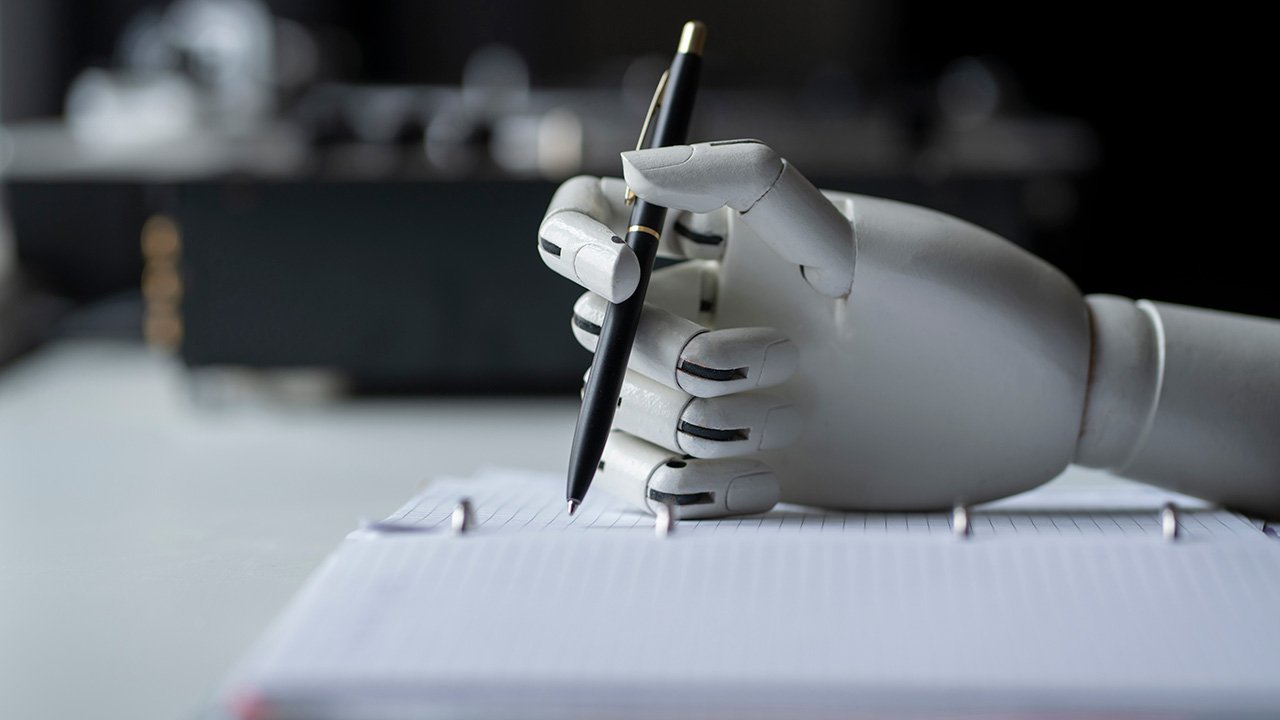
It’s a valid question! A language model doesn’t know what it feels like to lose sleep over a family business dispute or get a knot in your stomach when a summons arrives. But today, right here in the dispute resolution hub of Asia, Singapore isn’t replacing human heart with machine code. We are doing something much smarter: pairing the algorithm with the human hand.
This article is about how AI is reshaping mediation in Singapore, why the “human touch” just got a powerful upgrade, and where this digital handshake is taking us next.
AI Today
Let’s talk reality. What does AI in mediation really look like on the ground today? It’s not a sci-fi robot wearing a wig and holding a wooden gavel.
Instead, it is legal tech tools like MAIA—the Mediation AI Assistant offered by Singapore International Mediation Centre.
Imagine you’re a mediator handling a massive cross-border tech dispute. The parties had just dumped 800,000 pages of emails, WhatsApp messages, invoices, and technical specs onto your desk. In the old days, junior associates would burn through three boxes of highlighters and five gallons of red bull just to construct a simple timeline.
In a fraction of the time, tools like MAIA sift through the mountain of data, map out a clear chronological sequence of events, highlight key stakeholders, and summarize the key friction points.
Imagine this scenario: Two regional logistics firms are locked in a nasty battle over delayed shipments during a supply chain squeeze. Emotions run high. Firm A claims Firm B ghosted them for three weeks. Firm B claims Firm A breaches the contract first.
Before the mediation even starts, an AI case-analysis tool digests the chat logs and operational records. It doesn’t just organize the dates—it surfaces a fascinating pattern: 90% of the communication breakdowns occurred on Fridays after 6 PM.
When the mediator brings that AI-generated insight into the room, the temperature drops instantly. The narrative shifts from “They deliberately sabotaged our contract!” to “Wait, your team was understaffed on Friday shifts too?”
That’s what AI does. It extracts the raw, objective truth from the chaos so humans can focus on the resolution.
Now, let’s talk about another superpower AI brings to the table: Objective Reality Checks.
One of the hardest parts of mediation is dealing with what I would like to call the “Reality Checks Bites”.
When a human mediator tells a party, “Look, maybe your case isn’t as slam-dunk as you think,” the party often gets defensive. “You’re taking their side!”
But Singapore’s legal ecosystem has been experimenting with generative AI and data analytics to ground people’s expectations in real math.
Take the Legal Aid Bureau’s *Divorce Assets Division Estimator (Divorce Aide) tool. In family disputes, instead of spending $50,000 in legal fees arguing over who gets what percentage of a flat, parties can input their financial data into an algorithmic tool trained on hundreds of past judgments. The tool spits out a probabilistic range for e.g.: “Based on 10 years of precedent, court divisions for this asset profile typically land between 45% and 55%.”
When you show two angry parties a cold, hard statistical distribution generated by neutral data, the psychological effect can be profound. It’s no longer the mediator’s reality checks versus their ego; it’s math versus their wallet.
Suddenly, settling out of court for 50% doesn’t feel like losing—it feels like common sense. AI acts as a digital mirror, reflecting reality before people burn their savings on a trial.
Do We Still Need A Human Mediator?
Now, at this point, you might be thinking: “If AI can summarize 800,000 documents, spot communication patterns, and predict legal outcomes… why do we even need human mediators?”
Because AI can read every contract ever written, but it has never felt embarrassed. It has never felt betrayed by a business partner it trusted for twenty years.
Let me share yet another example that may not be far from reality.
Two co-founders of a boutique food empire are tearing their company apart. They have used AI tools to draft settlement terms, calculate asset splits, and run valuation metrics. On paper, the AI gives them the “perfect, fair economic split.”
Neither side will sign it.
Why? Because the dispute isn’t about equity percentages. It is about the company name—a brand named after their late grandmother’s recipe. The AI calculates the financial value of the trademark, but it cannot quantify filial piety or legacy.
It may take a human mediator sitting in a quiet room, pouring two cups of warm tea, and asking one simple question: “If your grandmother were in this room right now, what would she tell you two to do?”
And the paper is signed.
AI operates on logic and data. Mediation operates on empathy, trust, and creative compromise. An algorithm can optimize a compromise, but at this point, only a human can create the psychological safety required for two enemies to say, “I hear you, and I’m ready to move on.”
High Tech, High Touch
As we look to the future, Singapore’s stance on AI in dispute resolution is clear: we are building a High-Tech, High-Touch ecosystem.
We aren’t afraid of generative tools. The Law Society of Singapore, the courts, and our mediation bodies encourage innovation—provided it’s ethical, transparent, and verified and it protects clients’ confidentiality. We use AI to remove the administrative grind, lower the cost of dispute resolution, and make justice accessible to small businesses and individuals who can’t afford multi-year court battles.
But we keep human judgment firmly at the center.
Think of AI as the navigator in a high-performance rally car. It reads the map, calculates the turn speeds, alerts you to obstacles ahead, and tracks the weather. But the human mediator? They still have their hands on the steering wheel, feeling the feedback from the road, making the delicate split-second turns that keep everyone safe.
So, to wrap it up: Is AI going to replace mediators in Singapore?
No. And to paraphrase an oft tech quote: mediators who embrace AI will undoubtedly replace those who don’t.
*This tool is only for calculating asset pool not exceeding S$5m.


