

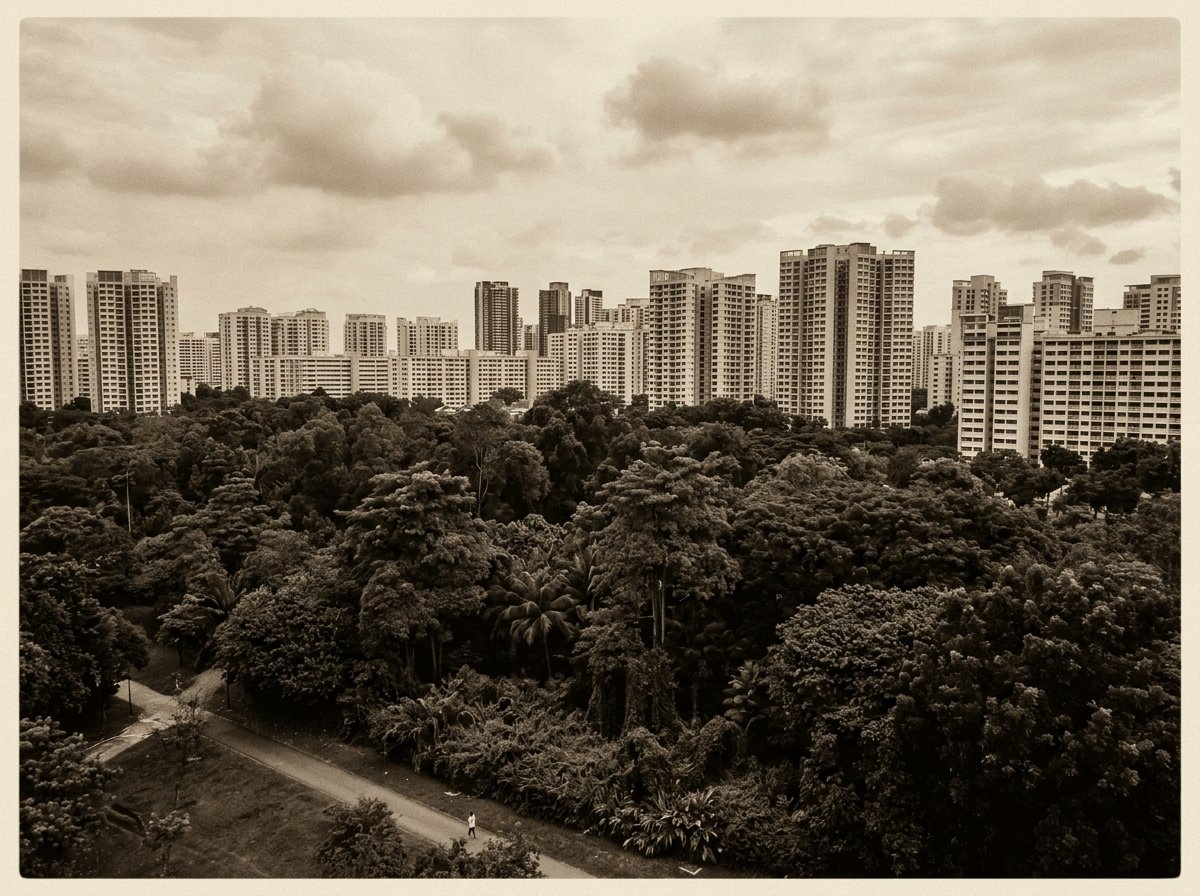
The ongoing public discourse surrounding the state’s proposal to redevelop portions of Maju Forest in Sunset Way for public housing underscores a recurring legal and planning tension in Singapore. On one side lies the pressing public interest in securing an adequate supply of affordable housing. On the other sits a growing societal demand for environmental conservation, biodiversity preservation, and procedural transparency.
From a regulatory and administrative law perspective, the government’s recent announcements regarding the retention of larger green buffers at Maju Forest thus reducing the residential footprint, warrant careful legal analysis. Beyond the environmental debate, this situation highlights how public consultation interfaces with statutory land-use frameworks, statutory duties, and judicial review in Singapore’s administrative landscape.
Master Planning and the Planning Permission Framework
Under the Planning Act 1998, land allocation and development density in Singapore are governed primarily through the Master Plan. Promulgated by the Urban Redevelopment Authority (URA) and reviewed every five years, the Master Plan functions as the statutory blueprint for land use.
When a greenfield site such as Maju Forest is slated for residential housing, several statutory steps are triggered:
- Master Plan Amendments: If the site is currently zoned for alternative uses or designated as open space/reserve land, URA must process a formal Master Plan amendment under Section 10 of the Planning Act. This requires public notification and an opportunity for objections to be lodged.
- Environmental Impact Assessments (EIAs): While Singapore does not have a single, standalone EIA statute, environmental baselines and impact assessments are frequently mandated by the Ministry of National Development (MND) and the National Parks Board (NParks) as administrative prerequisites before major development proposals proceed.
- Planning Permission: Under Section 13 of the Planning Act, statutory bodies like the Housing & Development Board (HDB) must apply for written permission prior to undertaking development works. Conditions regarding green buffers, drainage, and wildlife corridors are routinely appended to these grants.
Public Consultation and Legitimate Expectations
The Ministry of National Development’s recent willingness to adjust layout plans to conserve a larger portion of Maju Forest reflects an evolving approach to public engagement. However, clients frequently ask whether public engagement creates enforceable legal rights under administrative law.
In Singapore administrative law, the doctrine of substantive legitimate expectation—the idea that a public authority’s promise or established practice creates a legally binding entitlement to a specific outcome—is applied restrictively by our courts. The Singapore judiciary consistently holds that administrative flexibility must be preserved for public bodies to execute statutory mandates.
Consequently, public consultation exercises conducted by MND or URA do not legally bind the executive to adopt specific feedback. Instead, they trigger duties of procedural fairness. Where a government authority commits to a public feedback mechanism, administrative law requires that the consultation be carried out genuinely and without procedural impropriety, bias, or pre-determination. The decision to retain more greenery at Maju Forest demonstrates how public feedback can shape executive discretion informally, even where formal legal compulsion is absent.
Potential Grounds for Judicial Review
When stakeholders express dissatisfaction with land planning decisions, judicial review remains the primary legal mechanism to challenge administrative actions. In Singapore, judicial review focuses strictly on the legality of the decision-making process, rather than the merits of the decision itself.
To challenge a planning permission or Master Plan amendment successfully, an applicant would generally need to establish one of the classic administrative law grounds:
- Illegality (Unlawfulness): The planning authority acted outside the statutory powers granted under the Planning Act or failed to comply with statutory prerequisites (e.g., proper notification of rezoning).
- Irrationality (Wednesbury Unreasonableness): The decision was so outrageously illogical that no reasonable authority, addressing its mind to the statutory considerations, could have reached it. In environmental contexts, proving Wednesbury unreasonableness presents a remarkably high legal hurdle, as courts accord substantial deference to executive policy balancing housing demand against conservation.
- Procedural Impropriety: A failure to observe statutory procedure or fundamental principles of natural justice during the planning and consultation phase.
Strategic Considerations for Landowners and Developers
For landowners, developers, and residents in surrounding estates like Sunset Way, the legal developments around Maju Forest serve as an important case study:
- Proactive Engagement Over Litigation: Because judicial review of planning decisions faces high procedural thresholds, early participation in statutory Master Plan review windows yields more practical results than post-decision legal challenges.
- Regulatory Compliance in Site Selection: Developers acquiring parcels adjacent to natural habitats must anticipate stricter EIA standards and enhanced green buffer requirements imposed as conditions of planning permission.
- Property Valuations and Zoning Safeguards: Surrounding property owners should evaluate Master Plan zoning designations carefully rather than relying on the continued existence of adjacent undeveloped green spaces.
The outcome at Maju Forest illustrates a maturing planning regulatory framework where public participation and administrative law principles intersect. As Singapore continues to balance land-use priorities, navigating the statutory mechanics of the Planning Act remains essential for all property stakeholders.
If you are facing planning permission issues and would like to consult us, do call or use our Contact Us page.


